
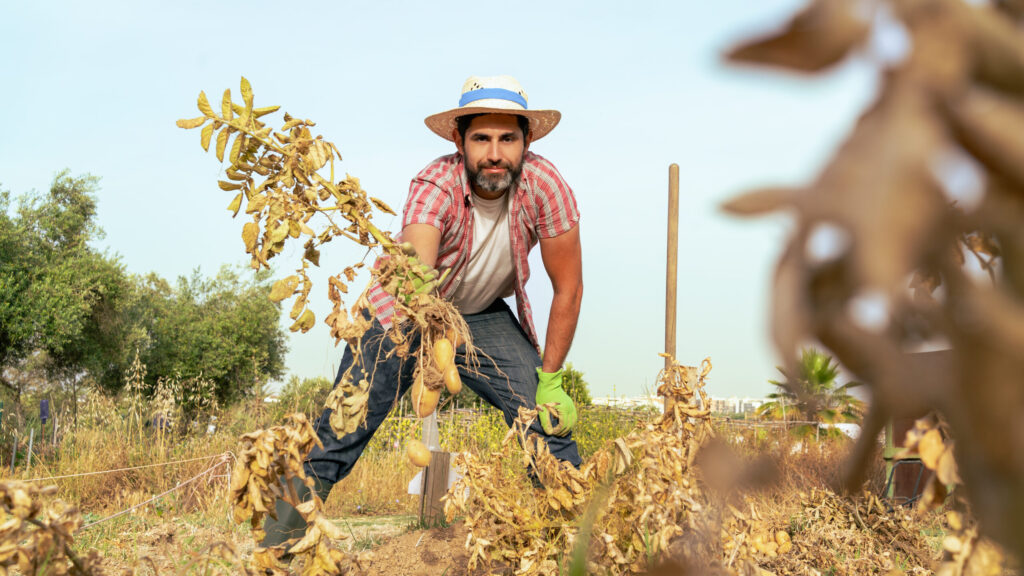
Every meal on an American table begins long before a fork is lifted. It begins in the predawn darkness of fields, in the sweltering rows of farms, in orchards and groves, and the corridors and coasts across our great nation. It begins with hands; skilled, reliable, legal hands, which show up when the harvest won’t wait.
Those hands increasingly belong to H-2A guest workers. And understanding why is essential to understanding something far larger: the future of American food security.
Food Security Is National Security
The United States produces enough food to feed itself and much of the world. That abundance is not accidental. It is the product of generations of agricultural investment, ingenuity, and labor; and it is fragile in ways that rarely make the news until a supply chain breaks.
When a harvest fails to get out of the field, the consequences ripple outward. Grocery prices are rising. Food banks strain. Export commitments go unmet. Regional economies that depend on agriculture; the small towns, the equipment dealers, the co-ops, the processing facilities, feel it immediately. A workforce shortfall is not an inconvenience. It is a national vulnerability.
As the United States approaches its 250th birthday in 2026, it is worth pausing to take stock of the workforce that sustains this country’s most essential industry. The picture is sobering. The American labor force is aging. Rural populations are declining. Young workers have gravitated away from physically demanding, weather-dependent seasonal agricultural work. The Bureau of Labor Statistics consistently documents the gap between agricultural labor demand and domestic supply. It is not a new trend. It is an accelerating one.
Not for a Lack of Trying
This is the most sobering truth in the entire H-2A conversation: American agricultural employers are not turning to the guest worker program because it is easier or cheaper. They turn to it because they have exhausted every other option.
Growers across the country post jobs, run ads, partner with workforce agencies, raise wages, offer housing, and recruit locally, for months, before a single H-2A petition is filed. The U.S. Department of Labor requires it. The jobs are posted. The wages are set at or above the Adverse Effect Wage Rate, which is consistently higher than minimum wage. U.S. workers are given priority, by law and in practice. And still, the positions go unfilled.
This is not a failure of American workers. It is a structural reality, the natural result of an economy that has many options, of a demographic shift decades in the making, and of the genuinely grueling nature of seasonal agricultural labor. The H-2A program exists precisely because policymakers, farmers, and economists recognized this reality and chose to address it legally, transparently, and with worker protections built in.
If you’re a grower weighing how to staff your next season, másLabor can walk you through the H-2A process with the experience of placing tens of thousands of workers on American farms.
The Program That Makes the Journey Possible
H-2A workers arrive on legal visas. They work under written contracts. They are housed, transported, and compensated according to federal standards. They return home when the season ends. And they come back, year after year, because the relationships they build with American farm families are genuine, rooted in mutual respect and shared purpose.
The journey from farm to table depends on this continuity. The strawberry that ships in November, the sweet potato harvested in September, the Vidalia onion pulled in April; none of it moves without the workforce that makes harvest possible.
The H-2A program is not a workaround. It is the infrastructure of American food security.
másLabor Commitment
másLabor is proud to serve the agricultural employers, growers, and business owners who feed this country. We celebrate our clients and the communities they sustain. We are grateful for the advocacy of partners like the National Council for Agricultural Employers (NCAE), whose tireless work shapes policy that protects both employers and workers.
As America marks 250 years of independence and innovation, we affirm our commitment to the farmers, the ranchers, the growers, and the rural economies that have always been the backbone of this nation. The H-2A program works. The workers it brings are essential. The food security it supports is non-negotiable.
From the field to your table, másLabor is honored to be part of that journey. If you’re ready to talk about staffing your next season, reach out to our team.