
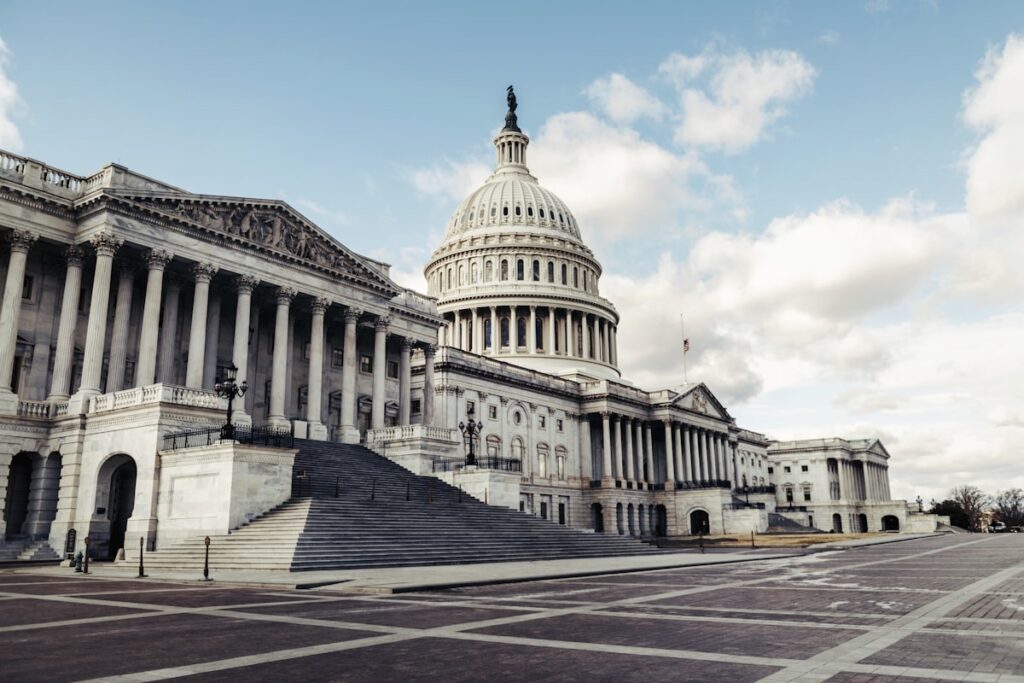
This season, I had the privilege of doing something many of us in this industry seldom get to do: take the challenges our clients face directly to the people who have the power to change them. In May, members of our H-2B leadership team made two trips to Washington, D.C., joining the National Association of Landscape Professionals (NALP) on May 5th and the Seasonal Employment Alliance (SEA) on May 19th, to advocate for a piece of legislative language that could fundamentally reshape how compliant, long-tenured H-2B employers experience this program.
That language is the Certified Seasonal Employer (CSE) designation, and it cannot come soon enough.
“We were there to carry the real-world weight of this season’s challenges directly to the people who can effectuate real change.”
A Season That Cannot Be Forgotten
Let’s be direct about what happened this year. The first-half H-2B cap was exhausted on September 12th. That left employers with start dates after early November in complete limbo for more than four months; no cap relief, no certainty, no ability to plan, and arguably most importantly, no idea of when relief might come.
A government shutdown on October 1st compounded the damage, creating significant backlogs for both Prevailing Wage determinations and ETA-9142 processing. Then came the April 1st filing period: over 10,000 applications submitted representing more than 160,000 positions, for a cap that guarantees only 33,000 visas. For employers who drew unfavorable lottery positions or found themselves buried in DOL processing delays, the season was simply gone.
When relief finally came on January 30th, it arrived with atypical strings attached: employers with start dates prior to January 1st were excluded entirely, and those with dates through March 31st were forced into a lottery that left many of them with nothing, and employers with April start dates only had a 44-day window to file for cap relief.
The human and economic cost of these failures is real:
- Landscaping companies forced to turn away contracts they’d already committed to
- Golf courses and resorts unable to staff for peak season
- Small businesses watching years of program compliance count for nothing in a lottery
- Workers and families dependent on program left without answers
Why the CSE Designation Changes Everything
The Certified Seasonal Employer designation is not a workaround or a giveaway. It is a targeted, earned exemption for businesses that have demonstrated years of program integrity. Under the proposed language, employers who were certified for the last five consecutive fiscal years would have their highest certified worker count exempted from the annual numerical cap.
This matters for several reasons. First, it creates predictability for the employers who have done everything right; who have filed consistently, maintained compliance, and invested in this program year after year. Second, it reduces the tsunami of first-day filings that overwhelm DOL and USCIS processing capacity each season, which ultimately benefits every employer in the system. Third, unlike the returning worker exemption that was eliminated in 2016, the CSE designation attaches to the employer, not the individual worker, building long-term structural stability into the program.
This is the kind of solution that respects how the program works in practice. It rewards compliance. It reduces systemic pressure. It gives businesses a foundation to plan, hire, and grow.
Why We Were in Washington
May is not an easy time to ask an H-2B employer to step away from their business. It’s peak season. Every day matters, and most employers were starting this season behind schedule due to government delays. That’s exactly why it was important for us to be there. Our clients were operating their businesses, but it was important to us that their stories were heard.
Our goal on these visits was consistent: present the real-world impact of this season’s failures, make the case for why the CSE language is the right and targeted fix, and ask Members on both sides of the aisle to support its inclusion in the baseline DHS Appropriations Bill, with identical language across both the House and Senate. That alignment is critical. Identical language in both chambers is the strongest protection against the provision being negotiated out during conference.
The meetings were positive. Members on both sides of the aisle expressed genuine understanding of the problem and real openness to meaningful change. These weren’t perfunctory conversations; they were substantive engagements with legislators and their staff who recognize that the current system is failing the very businesses it’s designed to serve.
“Being in those rooms, speaking directly with congressional members and staff about the real-world impact of this program, reinforced why this work matters and, hopefully, contributed to meaningful progress toward long-term stability.
What This Means for You
If you’re a long-tenured H-2B employer who has spent years doing things right, the CSE designation is being built with you in mind. If you’re newer to the program, this is a preview of what compliant participation can unlock — and a signal that your compliance record has value that extends well beyond any single filing season.
At másLabor, advocacy is not a hobby. It is part of how we deliver for our clients. Understanding the legislative landscape, and actively working to shape it, is how we ensure that the program you depend on continues to work for your business, your season, and your workforce.
We will continue to monitor the progress of the CSE language and keep our clients informed. If you have questions about how these changes could affect your program, or if you want to understand where your business stands in terms of CSE eligibility, reach out. That’s what we’re here for.